What is Safe Torque Off (STO) - And Why It Matters in Industrial Motor Control
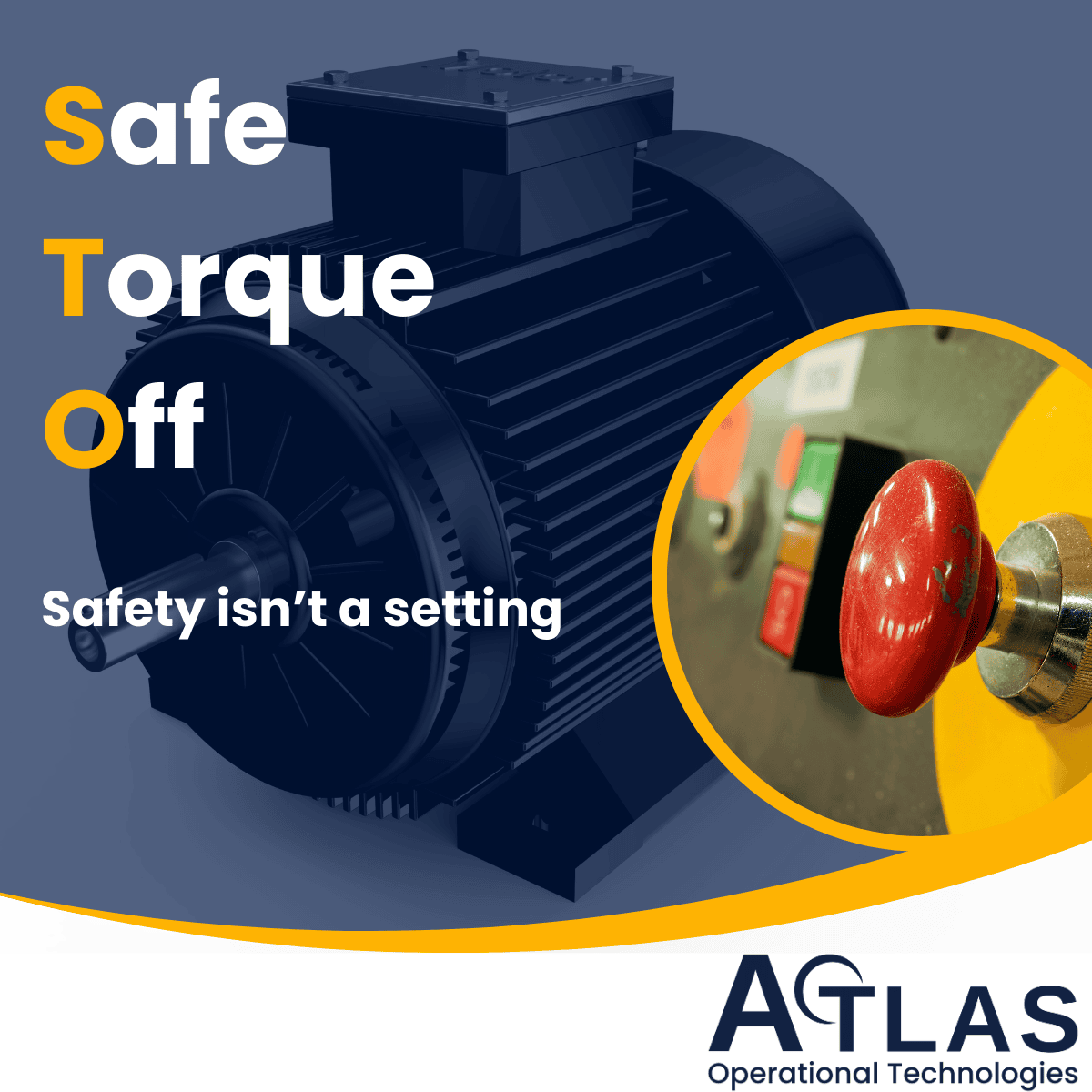
In today's industrial environments—whether it’s a municipal water plant, oilfield compressor station, or food processing facility—electrical safety around motors isn't optional. It’s a fundamental part of keeping people safe, reducing liability, and maintaining uptime. One increasingly adopted safety function is Safe Torque Off (STO).
But what does STO really mean? Is it something you can “set” in your control system, or is it something more?
Let’s break it down.
What Is STO?
Safe Torque Off (STO) is a safety function applied to electric motors to ensure no rotational force (torque) is applied to a load—even if the motor itself still has electrical potential.
The term "safe torque" can be misleading. A truly "safe" torque, by definition, is zero. To achieve this, power to the motor’s drive must be safely and reliably removed, ensuring the motor cannot apply motion.
Key Point: STO is not a brake, not an E-stop, and not a voltage cutoff—it’s a certified safety function for motor control.
What STO Is Not
What STO Is Not
Understanding what STO doesn’t do is just as important:
- STO is not a substitute for Lockout/Tagout (LOTO)
- STO is not an emergency stop system
- STO does not guarantee that the load won’t move (especially if it’s gravity-fed or under pressure)
- STO does not remove all voltages—it removes torque production capability from the motor
It’s a functional safety layer—part of a larger risk mitigation strategy.
Is There a “Setting” or “Calculation” for STO?
No. Unlike other motor functions, STO is not configured by an analog setting or numeric value. It’s not something you “tune” in the PLC.
Instead, STO is achieved through:
- Proper device selection (e.g., VFDs or motor starters with STO inputs)
- Smart control system design
- Safety-rated wiring and circuit isolation
- Careful project planning and risk analysis
Why STO Matters in Critical Infrastructure
In sectors like water/wastewater, oil & gas, and industrial manufacturing, the cost of injury or uncontrolled motion isn’t just financial—it’s regulatory and reputational.
Implementing STO adds a layer of protection for maintenance and operations personnel, especially during activities like:
- Motor troubleshooting
- Drive resets
- Mechanical servicing of connected equipment
STO is recognized in U.S. and international safety standards, including those from IEC, NFPA, and corporate or insurance-driven risk frameworks.
How Atlas OT Helps Clients Apply STO Correctly
At Atlas OT, we support STO implementation as part of larger control system modernization or equipment upgrade efforts. Our approach includes:
- Risk-based analysis: Determine which motors need STO based on hazards, operations, or near misses
- Control system design: Engineer the right safety logic and wiring to enable STO without compromising operations
- Training & procedures: Ensure your field teams understand what STO does—and doesn’t do
- Support with device selection: Help machine builders, OEMs, and operators specify STO-capable hardware
- Documentation for compliance: Ensure STO strategies align with applicable standards and site policies
When Should STO Be Implemented?
We recommend that organizations consider STO after:
- A safety review
- A process hazard analysis (PHA)
- A mechanical near-miss
- A retrofit or modernization planning cycle
Implementing STO isn’t just about ticking a safety box—it’s about building resilient, reliable systems that prioritize people first.
Conclusion: STO Is Not a Setting—It’s a Smart Safety Strategy
If your facility uses motors (and whose doesn’t?), STO is worth considering—not as a replacement for safety, but as a supplement to it.
At Atlas OT, we help you understand the requirements, design with intent, and execute solutions that protect your people and your process.
Ready to discuss how STO fits into your safety or modernization plans?
Contact Atlas OT to schedule a review.