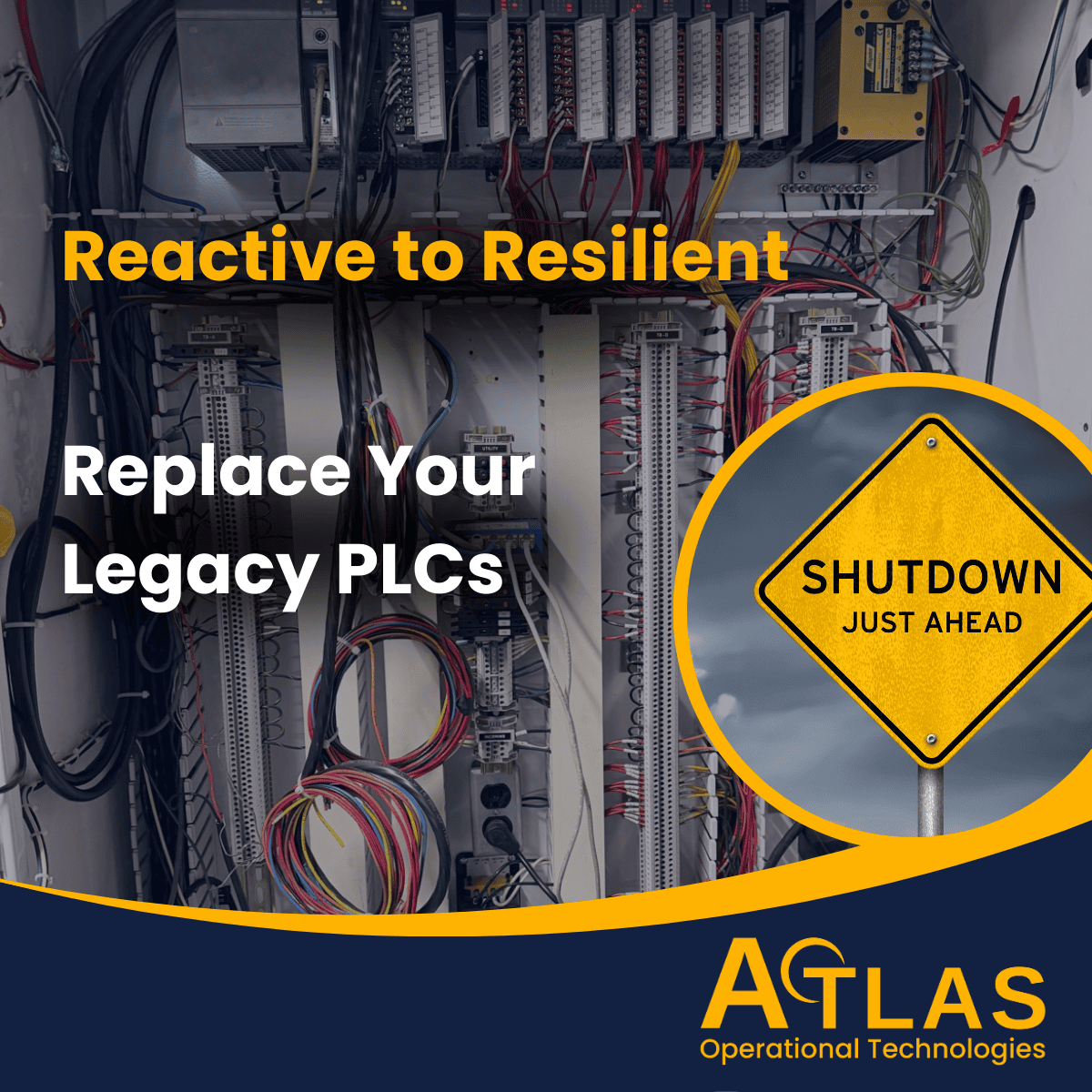
Why Legacy PLC Systems Are a Growing Concern
The Hidden Costs of Legacy Hardware
Increased downtime due to aging components
Expensive repair work when parts are hard to source
Limited access to new features like real-time data integration
Lack of scalability for plant expansion or IIoT upgrades
These hidden costs add up fast—especially when downtime affects production targets or customer delivery timelines.
Why Manufacturers Delay Upgrades — Common Misconceptions
From our experience working with clients across industries, here are the top reasons upgrades are often postponed:
“If it ain’t broke, don’t fix it.”
Concerns about disruption to production during migration
Belief that upgrades are too expensive
Lack of in-house expertise to manage the transition
These are valid concerns, but they often stem from outdated assumptions. Modern PLC migration strategies can now be executed with minimal disruption, and costs can be phased to align with budget cycles.
The Business Case for PLC Modernization in 2025
In 2025, upgrading legacy PLCs is not just a technical decision—it’s a strategic move. Companies that invest in modernization gain:
Enhanced safety and compliance with updated standards like OSHA and NFPA 70E
Reduced downtime through predictive analytics and remote diagnostics
Improved energy efficiency and system responsiveness
Seamless integration with SCADA and IIoT platforms
At Atlas OT, we specialize in modernization projects that are designed around your schedule, your facility, and your goals. Whether you’re planning a full migration or starting with a system audit, the first step is understanding what qualifies as a “legacy PLC”—and why that matters.
What Is a Legacy PLC System?
Defining Legacy: When Is a PLC Considered Obsolete?
A PLC is considered “legacy” when it’s no longer supported by the manufacturer or when replacement parts and software updates are unavailable. Typically, this happens 10–15 years after release, but many facilities continue operating these systems long after support ends.
Key indicators of a legacy PLC include:
No firmware updates or patches from the OEM
Discontinued support contracts
Incompatibility with modern programming environments
Lack of integration with new SCADA, HMI, or IIoT tools
Common Examples (e.g., Allen-Bradley SLC 500, Siemens S5)
Some widely used legacy systems we often see in the field include:
Allen-Bradley SLC 500 – Discontinued but still used in thousands of plants
Siemens S5 – A robust controller in its day, now obsolete
Modicon 984 – Once a standard in process automation, but hard to maintain today
These PLCs were groundbreaking decades ago, but technology has evolved. They now pose significant limitations in terms of flexibility, speed, and interoperability.
Incompatibilities with Modern Protocols and Tools
Legacy PLCs often don’t support Ethernet/IP, OPC UA, MQTT, or other modern communication protocols. That means:
No integration with cloud platforms or analytics tools
No access to remote diagnostics or centralized data
No compatibility with modern SCADA software like those we develop through our SCADA development services
Modernization isn’t about scrapping everything—it’s about bridging the old with the new through planned, efficient migration strategies.
Key Risks of Operating Legacy PLCs
Lack of Vendor Support and Spare Parts
When vendors stop supporting hardware, you're left hunting for secondhand parts—or worse, dealing with total system failure. Lead times for replacements can stretch from weeks to months, making unplanned downtime costly and stressful.
Cybersecurity Vulnerabilities
Legacy systems were not built with cybersecurity in mind. Without proper protection:
Outdated PLCs can become easy targets for cyberattacks
They often lack encryption, authentication, or secure access protocols
Network segmentation is difficult, making your entire industrial control system (ICS) vulnerable
Upgrading to modern PLCs with cybersecurity baked in helps you align with ISA/IEC 62443 standards and protect your operations.
Inefficiencies in Performance and Energy Consumption
Old PLCs operate slower and require more energy. Over time, this impacts:
Cycle times and throughput
Equipment wear and tear
Overall plant efficiency
Modern systems allow for real-time control, predictive analytics, and energy optimization—the building blocks of Industry 4.0.
Regulatory Noncompliance (e.g., OSHA, NFPA 70E)
Using obsolete control systems can put you out of compliance with updated regulations like:
OSHA electrical safety standards
NFPA 70E arc flash requirements
EPA reporting rules
Modernizing your control panels and logic helps ensure compliance. Our team also offers electrical and control panel upgrades to keep you up to code.
Step-by-Step Modernization Strategy
Step 1: System Audit and Risk Assessment
Before touching any hardware, conduct a detailed system audit. This includes:
Documentation and Asset Inventory
List all PLC models and firmware versions
Map out network topologies
Gather schematics, wiring diagrams, and logic backups
Identify Failure Points and Obsolete Modules
Spot recurring maintenance issues
Highlight systems without vendor support
Flag components critical to production
A full audit lays the foundation for a safe, efficient migration.
Step 2: Define Functional Requirements
Work with your team to define what the new system must do:
Inputs, outputs, process interlocks
SCADA/HMI integration
Compliance and data reporting needs
This ensures the new platform meets current and future requirements.
Step 3: Select Suitable Modern PLC Platforms
Choose hardware that fits your application and plant architecture. Factors to consider include:
Vendor support availability
Integration with existing SCADA
Long-term upgrade path
We often recommend platforms from Rockwell Automation, Siemens, or Schneider Electric, depending on your environment.
Step 4: Phased Implementation Plan
Rolling out changes in phases minimizes downtime. Key steps include:
Simulation, Testing, and Changeover Planning
Use software simulators to test logic before deployment
Plan weekend or off-shift cutovers
Create rollback plans in case issues arise
Step 5: Training and Operator Change Management
A smooth transition depends on user adoption. Invest in:
Operator and maintenance training
Updated SOPs and manuals
Onsite support during go-live
Choosing the Right PLC for the Future
Criteria for Selection: Modularity, Compatibility, Support
When selecting a new PLC platform, look for:
Modularity for easy expansion
Open protocols like OPC UA or MQTT
Long-term vendor support
Compatibility with SCADA, MES, and cloud platforms
Should You Consider Open Source or Edge PLCs?
Open-source PLCs and edge computing are gaining traction. They offer:
Lower initial costs
Greater flexibility and custom logic
Integration with IIoT edge devices
However, they may lack support or robustness for high-stakes production environments. Consult with a partner like Atlas OT before choosing nontraditional options.
PLC Migration and Programming Considerations
Logic Conversion Tools (e.g., RSLogix to Studio 5000)
Tools like Rockwell’s conversion utilities help automate logic migration:
Reduce manual reprogramming time
Maintain I/O mappings and structure
Flag incompatible instructions for review
Data Mapping and Tag Structure Modernization
Modern PLCs use tag-based programming, unlike older address-based models. You'll need to:
Reorganize tag databases
Rename variables for clarity and scalability
Define new data structures for IIoT readiness
Validating Control Sequences and Fail-safes
Post-conversion, validate all sequences through:
Simulation tools
Dry runs with IO overrides
Functional acceptance testing (FAT)
This ensures production integrity from day one.
SCADA/HMI Integration During Upgrade
Modern PLCs integrate seamlessly with SCADA systems. We help clients through complete SCADA development, including:
Tag linking
Alarm setup
Historical trending
Upgrades are also a great time to refresh your HMI for better usability and operator safety.
How Modern PLC Systems Improve Operational Efficiency
Real-Time Data Collection and IIoT Readiness
With modern PLCs, your systems can stream real-time data to:
Edge devices
Cloud analytics platforms
ERP and MES systems
This is the backbone of Industrial IoT (IIoT) and digital transformation.
Reduced Downtime Through Predictive Analytics
Modern systems can flag:
Motor wear
Temperature anomalies
Voltage drops
By integrating sensors and analytics, you gain early warnings before downtime happens.
Increased System Responsiveness and Performance
New PLCs offer:
Faster scan times
Higher I/O density
Built-in PID, motion, or safety capabilities
This boosts throughput and enables more sophisticated automation strategies.
Regulatory & Compliance Benefits of PLC Modernization
Meeting ISA/IEC 62443 for Cybersecurity
Modern platforms support:
Secure boot and firmware signing
Role-based user access
Network segmentation and encryption
These are essential parts of ISA/IEC 62443.
Adhering to OSHA, EPA, and NFPA Standards
Compliance is easier when your system can:
Generate automatic reports
Include up-to-date safety interlocks
Integrate with safety relays and lockout/tagout systems
We also support full upgrades of your control panels to align with NFPA 70E requirements.
Easier Integration with OOOO/a/b/c Reporting Tools
If you're in a regulated sector, like oil & gas or chemicals, your PLCs should integrate with emissions tracking and OOOO/a/b/c compliance tools to streamline environmental reporting.
When and How to Start Your PLC Upgrade
Cost vs. Risk Justification
If you’re still asking, “When should you upgrade your PLC system?”, the answer lies in the risks you’re currently exposed to:
Unpredictable downtime
Outdated compliance
Increased cybersecurity exposure
A well-planned upgrade pays for itself through reduced downtime, improved safety, and lower long-term costs.
Recommended Timeline for Industrial Facilities
Start with:
A system audit this quarter
A migration roadmap in the next 6–12 months
Full deployment over 1–3 years, depending on facility size
You don’t need to do everything at once—just get started.
How Atlas OT Can Assist with Turnkey PLC Migration
At Atlas OT, we handle the entire modernization process, including:
System audits and risk assessments
Drafting and design for E&I upgrades (Explore our design services)
PLC programming, SCADA integration, and compliance documentation
If you're ready to leave legacy PLCs behind, we're here to help you build a modern, secure, and future-ready control system.