In the high-stakes environment of heavy manufacturing, municipal water treatment, and critical energy infrastructure, equipment failure is not an option. Before sophisticated SCADA architectures and high-level PLC logic can manage a facility, the fundamental electromechanical hardware must be virtually indestructible.
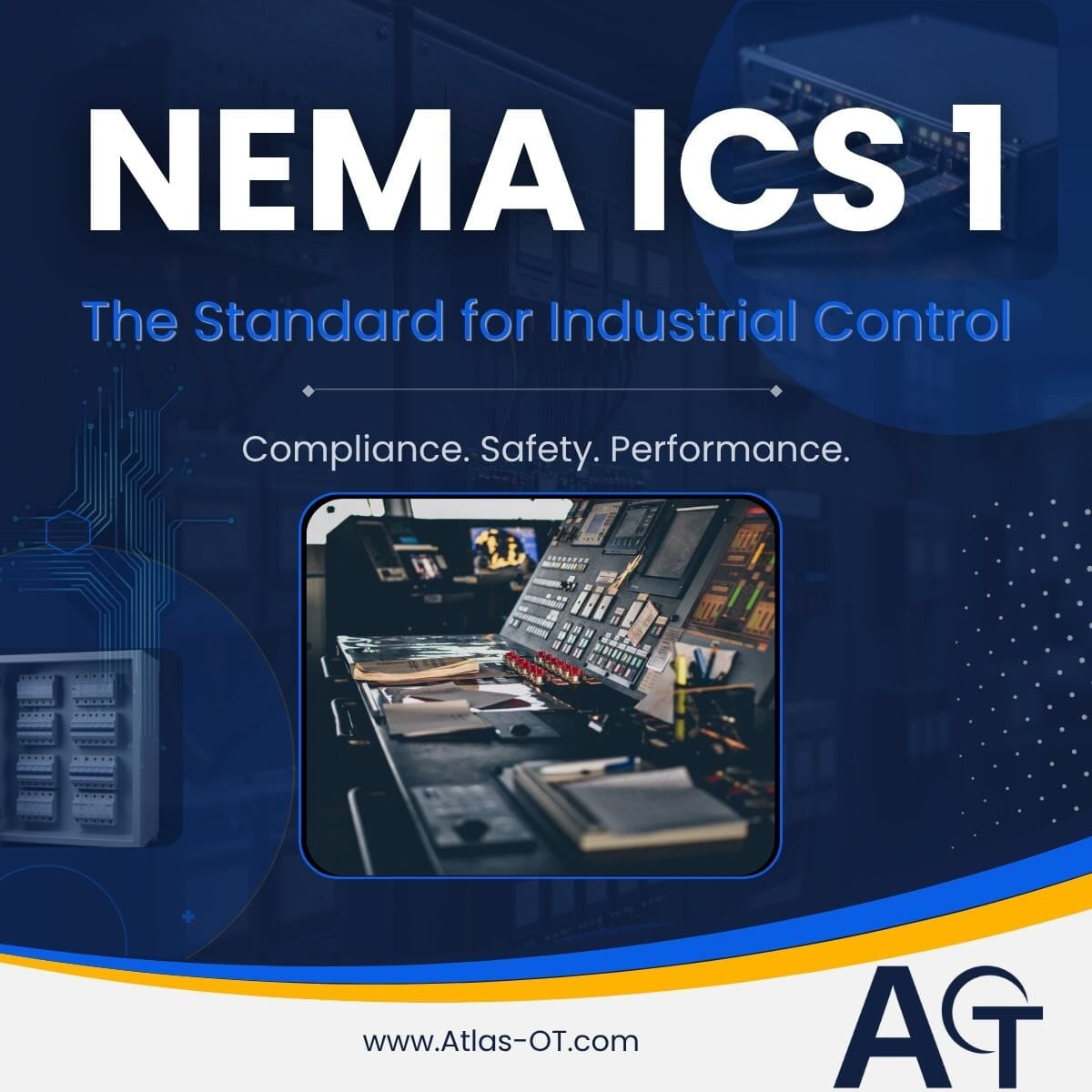
The physical hardware that moves the electricity—the contactors that slam shut, the relays that route logic, and the starters that crank massive motors, must adhere to uncompromising engineering standards. In North America, the definitive benchmark for this hardware is NEMA ICS 1: General Standards for Industrial Control and Systems.
At Atlas OT, we design premium, mission-critical control architectures. We do not rely on mass-market, disposable electronics. When we fabricate a UL 508A control panel, we specify hardware built to the specifications of NEMA ICS 1. This pillar page serves as your definitive guide to understanding this foundational standard and why over-engineered hardware protects your facility from catastrophic downtime.
The Foundation of Industrial Control: Why NEMA ICS 1 Matters
Published by the National Electrical Manufacturers Association (NEMA), ICS 1 is the overarching standard that dictates the performance, testing, and construction of industrial electromechanical controls.
Before the widespread adoption of programmable logic controllers (PLCs), entire factories were automated using massive walls of physical relays and timers. NEMA ICS 1 was established to ensure that these components could survive decades of continuous mechanical slamming, electrical arcing, and extreme thermal stress.
Today, while PLCs handle advanced computing, NEMA ICS 1 hardware still serves as the physical muscle. This standard provides uniformity across the industry. When a plant engineer specifies a "NEMA Size 3 Starter," they know exactly how much horsepower it will handle, regardless of which premium manufacturer built it.
Contactors: The Heavy Lifters of Automation
Contactors are electrically controlled switches used for routing massive amounts of high-voltage power. Unlike standard relays, contactors are designed to handle massive arc suppression when interrupting heavy loads. NEMA ICS 1 strictly governs their physical construction:
Standardized Sizing: NEMA defines specific contactor sizes based on load and voltage. This ensures predictable, highly reliable hardware performance across all your facility's upgrades.
Thermal Capacity: Contactors are engineered to handle severe electrical arcing. They manage massive thermal loads effortlessly without physically welding their contacts shut.
Premium Longevity: Built for decades of mechanical abuse, NEMA contactors feature heavy-duty copper bussing and incredibly robust silver-alloy contact pads.
Arc Suppression: The standard mandates specific physical designs to safely extinguish dangerous electrical arcs that occur when high-voltage circuits are opened.
Relays: The Rugged Logic Commanders
While PLCs manage digital bits, industrial control relays manage physical, high-voltage logic. They provide the critical isolation barrier between the delicate 24VDC microprocessor and the 480VAC plant floor:
Control Relays: Designed to switch lower-current logic circuits safely. They provide essential physical isolation between sensitive PLCs and heavy, unpredictable machinery.
Overload Relays: These devices protect motors. They sense thermal buildup from excessive current and trip the circuit before winding insulation melts.
Timing Relays: These provide precise chronological sequencing for mechanical batch processes. They also delay motor starts to prevent crippling electrical grid sag.
Continuous Current Ratings: NEMA ICS 1 guarantees that relays can carry their fully rated electrical current continuously, 24/7, without overheating or failing.
Motor Starters: The Muscle of the Plant Floor
A motor starter is the most critical piece of hardware in any pumping or conveyor application. NEMA ICS 1 dictates that a true motor starter is the physical combination of a heavy-duty contactor and a dedicated overload relay:
The Core Assembly: Combining a contactor with an overload relay provides complete motor protection, shielding equipment from both short circuits and gradual overheating.
The Sizing Chart: Sizing ranges strictly from Size 00 up to Size 9. This standardizes horsepower limits and completely eliminates dangerous hardware selection guesswork.
Replaceable Components: Unlike disposable mass-market parts, premium NEMA starters feature fully replaceable heater elements (part of the thermal overload relay) and modular coil assemblies for lifetime maintainability.
Mechanical Durability: NEMA starters are over-engineered. They are specifically tested to survive millions of mechanical operations in highly abrasive, vibration-heavy environments.
Controllers & General System Requirements
Beyond individual components, NEMA ICS 1 defines the parameters for how these devices must be enclosed, spaced, and tested to prevent lethal electrical events:
Voltage Ratings: The standard strictly defines operational voltage limits. This ensures controllers safely manage massive 480V or 600V industrial feeds without insulation breakdown.
Clearance and Creepage: The standard defines the exact physical distances required between live electrical parts. This prevents electricity from jumping gaps and causing lethal arc flashes.
Dielectric Testing: Controllers undergo rigorous laboratory testing. They must prove they can withstand massive voltage spikes without suffering catastrophic internal failure.
Environmental Resilience: Components are validated to perform flawlessly despite extreme temperature swings, high humidity, and the constant mechanical vibration of heavy industry.
The Premium Choice: NEMA vs. IEC Component Design
NEMA Design Philosophy: Built with massive safety margins. These components are physically larger and over-engineered to survive unforeseen spikes and extreme mechanical abuse.
IEC Design Philosophy: Application-specific and precisely sized. They save panel space and upfront cost but lack the sheer physical durability of NEMA gear.
Ease of Selection: Specifying NEMA gear requires basic motor data. IEC selection requires complex calculations regarding exact duty cycles and precise operational categories.
The Atlas OT Standard: For critical municipal utilities and heavy industrial applications, we specify NEMA-rated gear to guarantee unmatched, generation-spanning operational longevity.
How Atlas OT Executes to NEMA ICS 1
At Atlas OT, we recognize that an automation system is only as strong as its weakest physical link. We do not compromise on hardware, and we do not utilize consumer-grade electronics in our industrial builds.
Our engineering methodology guarantees that your facility's physical hardware matches the sophistication of its software:
Precision Hardware Matching: We match your facility’s motor loads to NEMA ICS 1 compliant contactors and starters, ensuring absolute reliability under peak operational stress.
UL 508A Panel Fabrication: Our in-house engineering team utilizes NEMA-rated components within our UL-certified enclosures, guaranteeing perfect adherence to clearance, creepage, and thermal dissipation standards.
Hazardous Location Integration: When building systems for explosive environments, we utilize intrinsically safe barriers paired with rugged NEMA relays that will not fail under extreme environmental pressure.
Lifecycle Maintainability: By utilizing standardized NEMA hardware, we ensure that your maintenance teams can easily source replaceable parts decades after the initial installation, lowering your Total Cost of Ownership.
Industrial control hardware is the frontline defense for your equipment and your personnel. Do not jeopardize your infrastructure with undersized, mass-market components. Partner with the Atlas OT, the integration firm that builds exclusively for rugged longevity.