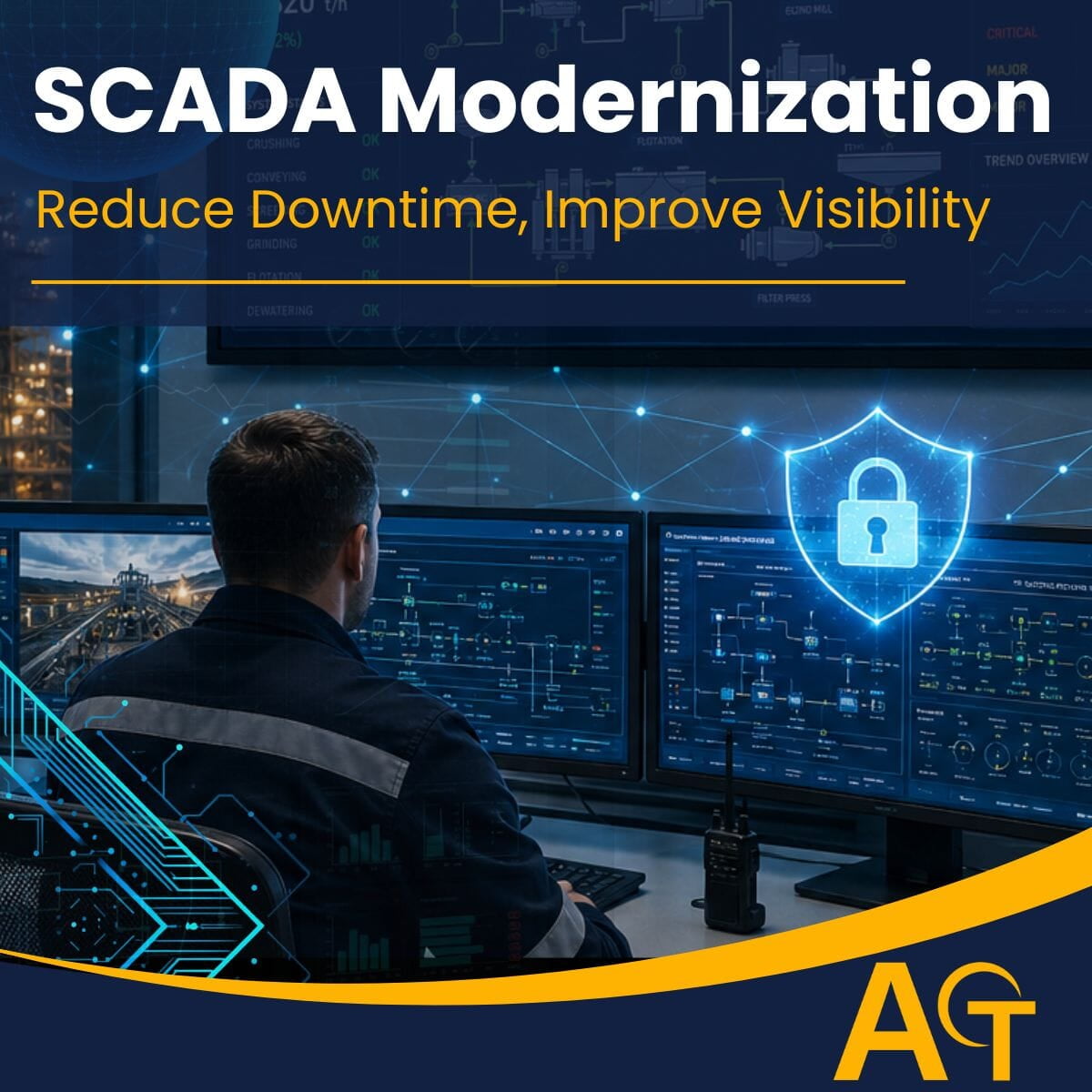
Across industries such as mining, energy, manufacturing, water treatment, and critical infrastructure, Supervisory Control and Data Acquisition (SCADA) systems serve as the backbone of operational control. These systems provide operators with real-time visibility into equipment performance, process conditions, alarms, and production metrics.
However, many organizations continue to rely on aging SCADA platforms that were implemented decades ago. While these systems may still function, they often struggle to meet modern operational demands, cybersecurity requirements, and data integration needs.
As industrial operations become increasingly connected and data-driven, modernizing SCADA infrastructure is no longer simply a technology upgrade—it is a strategic investment that improves reliability, reduces downtime, and enhances decision-making across the organization.
The Hidden Cost of Legacy SCADA Systems
Many organizations delay SCADA modernization because existing systems appear to be operating adequately. However, aging infrastructure often creates hidden risks that impact productivity and profitability.
Common challenges associated with legacy SCADA systems include:
Limited real-time visibility into operations
Obsolete hardware and unsupported software
Increasing maintenance costs
Lack of cybersecurity protections
Difficulty integrating with modern business systems
Increased risk of unplanned downtime
Limited scalability for future growth
These issues often lead to operational inefficiencies that accumulate over time, increasing both direct and indirect costs.
For facilities operating critical assets, even a few hours of unexpected downtime can result in significant production losses, missed delivery commitments, and increased safety risks.How Modern SCADA Systems Reduce Downtime
Downtime remains one of the most expensive challenges facing industrial organizations. Modern SCADA platforms provide several capabilities that help reduce operational interruptions and improve system reliability.
Real-Time Monitoring and Faster Response
Modern SCADA systems provide operators with instant access to equipment status, process conditions, and alarm notifications.
Rather than waiting for equipment failures to escalate, operators can identify abnormalities early and take corrective action before production is impacted.
Benefits include:
Faster fault detection
Improved alarm management
Reduced troubleshooting time
Enhanced operational awareness
When operators have access to accurate, real-time information, they can make informed decisions that minimize disruptions and improve overall plant performance.
Improved System Reliability
Many legacy systems depend on aging servers and hardware that are increasingly difficult to maintain.
Modern SCADA architectures often leverage:
Virtualized servers
Redundant communication networks
High-availability infrastructure
Automated backups and recovery processes
These improvements significantly reduce the likelihood of hardware-related failures and improve overall system resilience.
Predictive Maintenance Opportunities
Modern SCADA platforms collect and analyze operational data from connected equipment.
By identifying trends such as:
Increased motor temperatures
Abnormal vibration levels
Pressure fluctuations
Performance degradation
Organizations can transition from reactive maintenance to predictive maintenance strategies.
Choosing the Right SCADA Platform
Selecting a SCADA platform is not just a software decision; it is a long-term operational technology decision that affects reliability, cybersecurity, maintenance, reporting, operator efficiency, and future system expansion. Common SCADA software platforms include:
- Ignition by Inductive Automation
- VTScada by Trihedral
- AVEVA System Platform / InTouch (formerly WonderWare)
- Rockwell FactoryTalk View
- Siemens WinCC
- GE iFIX
- Schneider Electric EcoStruxure
Each platform has strengths depending on the application, existing PLC infrastructure, licensing model, remote access requirements, historian needs, alarm management expectations, and internal support capabilities. When evaluating SCADA brands, owners should consider more than the initial purchase price. Important selection factors include:
- ease of integration with existing PLCs and field devices
- licensing scalability
- high availability and redundancy options
- cybersecurity architecture
- support for modern protocols such as OPC UA and MQTT
- reporting and historian capabilities
- mobile or web-based access
- vendor support
- and the availability of qualified integrators
A platform that works well for a small local HMI may not be the best choice for a multi-site enterprise SCADA system, and a system that is technically powerful may still become expensive or difficult to maintain if the local team cannot support it.
The best SCADA software is usually the one that fits the facility’s operational needs, lifecycle expectations, and support model—not simply the most popular brand. A well-selected SCADA system should provide operators with clear visibility, give maintenance teams actionable diagnostics, support secure remote access where appropriate, and allow the organization to expand without requiring a full replacement every few years.
Improving Operational Visibility Across the Enterprise
One of the most valuable benefits of SCADA modernization is improved visibility into industrial operations.
Modern systems provide a centralized view of operational data, enabling stakeholders at every level of the organization to make better decisions.
Enhanced Operator Visibility
Updated human-machine interfaces (HMIs) provide intuitive dashboards and visualizations that improve situational awareness.
Operators can quickly identify:
Production bottlenecks
Equipment abnormalities
Alarm conditions
Process deviations
Improved visibility allows teams to respond more effectively to changing operating conditions.
Centralized Data Collection
Modern SCADA platforms consolidate information from multiple systems and facilities into a single operational view.
Organizations gain access to:
Historical trends
Production data
Asset performance metrics
Energy consumption information
This centralized approach improves reporting accuracy and supports data-driven decision-making.
Better Executive Insights
Operational visibility is no longer limited to control room personnel.
Modern SCADA systems can securely share data with management teams, engineers, and business leaders, providing valuable insights into:
Operational efficiency
Production performance
Maintenance requirements
Capital planning opportunities
Strengthening Cybersecurity Through SCADA Modernization
As industrial environments become more connected, cybersecurity must be integrated into modernization initiatives.
Legacy SCADA systems often lack essential security features required to defend against modern cyber threats.
Modern platforms support:
Role-based access control
Multi-factor authentication
Secure remote access
Network segmentation
Continuous monitoring
Improved audit capabilities
The Role of Virtualization in Modern SCADA Environments
Virtualization has become a key component of many successful modernization strategies.
Instead of relying on numerous physical servers, organizations can host SCADA applications in virtualized environments that improve flexibility and reliability.
Benefits include:
Reduced hardware costs
Faster system deployment
Simplified maintenance
Improved disaster recovery
Greater scalability
Virtualization also supports high-availability architectures that help maintain operations even during hardware failures.
For critical infrastructure operators, this added resilience can significantly reduce downtime and operational risk.Signs It May Be Time to Modernize Your SCADA System
Organizations should consider modernization if they are experiencing:
✓ Unsupported software or operating systems
✓ Difficulty obtaining replacement hardware
✓ Frequent downtime incidents
✓ Limited cybersecurity capabilities
✓ Inability to integrate with modern technologies
✓ Increasing maintenance costs
✓ Poor visibility into operational performance
Best Practices for a Successful SCADA Modernization Project
Successful modernization requires careful planning and execution.
Key considerations include:
Conduct a Comprehensive Assessment
Evaluate existing infrastructure, hardware, software, communications, and cybersecurity controls.
Define Business Objectives
Modernization should support measurable outcomes such as:
Reduced downtime
Improved reliability
Enhanced cybersecurity
Better reporting capabilities
Increased operational efficiency
Minimize Operational Disruption
Migration strategies should prioritize operational continuity and risk reduction throughout the project lifecycle.
Build for Future Growth
How Atlas OT Supports SCADA Modernization
Atlas OT specializes in designing and implementing modern SCADA solutions for industrial and critical infrastructure environments.
Our expertise includes:
SCADA migration and modernization
OT network architecture
Virtualization and high availability
Cybersecurity integration
Industrial control systems
UL508A and UL698A control panel solutions
System testing and commissioning
Conclusion
SCADA modernization is more than a technology upgrade, it is a strategic initiative that enables organizations to improve reliability, strengthen cybersecurity, reduce downtime, and gain greater visibility into operations.
As industrial facilities continue to embrace digital transformation, modern SCADA systems provide the foundation needed to support safer, more efficient, and more resilient operations.