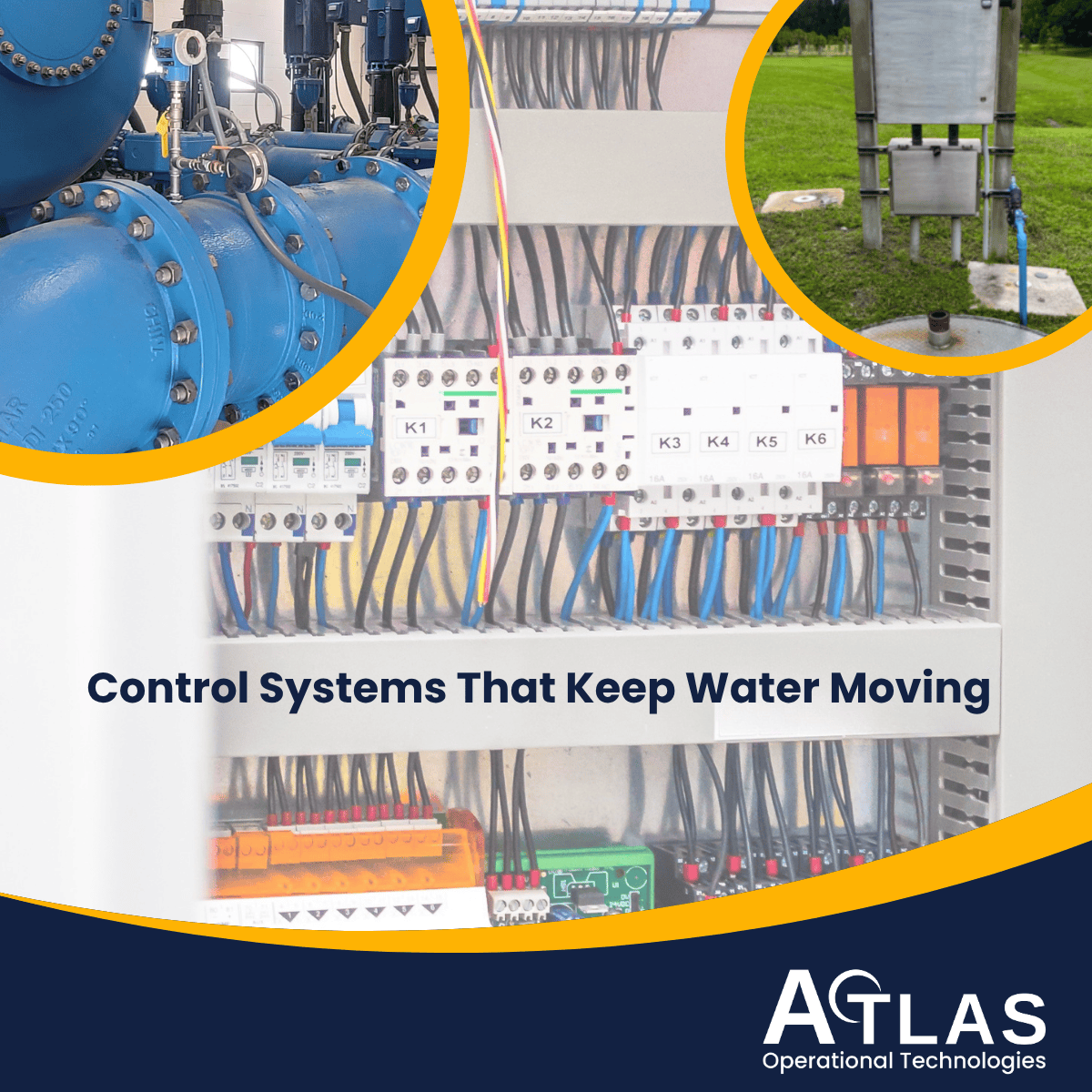
Water and wastewater lift stations are essential components of municipal and industrial infrastructure. They move sewage or stormwater from lower to higher elevations, ensuring the continuous flow of water through treatment facilities or distribution systems. Any failure in a lift station can lead to costly downtime, environmental compliance issues, and public safety risks.
Understanding control system design for lift stations is therefore crucial for operations leaders. A properly designed system ensures reliability, optimizes performance, and integrates modern automation technologies such as SCADA and PLCs for real-time monitoring, telemetry, and predictive maintenance.
Modern lift stations increasingly rely on automation platforms that incorporate SCADA, PLCs, telemetry, and industrial networking. Choosing the right combination requires careful consideration of operational needs, cybersecurity, scalability, and integration with existing infrastructure.
Introduction: Why Lift Station Control Systems Matter
Reliable lift station control systems are critical for several reasons:
- Operational Uptime: A failed pump or control system can halt water flow, causing backups, overflows, and service interruptions.
- Cost Efficiency: Poorly designed control systems can result in frequent maintenance, higher energy usage, and unplanned downtime.
- Regulatory Compliance: Many water and wastewater facilities must adhere to strict environmental and reporting standards. Automated control and monitoring systems help ensure compliance.
- Safety and Security: Control systems protect operators and the public from hazards associated with overflows or pump failures.
SCADA and PLC integration provides centralized control, remote monitoring, and predictive alerting, reducing risk and improving operational efficiency. By evaluating control system design carefully, operations leaders can ensure their lift stations are robust, scalable, and future-ready.
Understanding Lift Station Operations
Key Components of a Lift Station
Lift stations consist of several critical components that work together to transport wastewater or stormwater effectively:
- Pumps and Motors: Typically, centrifugal or submersible pumps controlled by variable frequency drives (VFDs).
- Valves and Flow Meters: Regulate and measure the flow of water through the system.
- Level Sensors: Detect water levels in wet wells to trigger pump operation.
- PLCs: Programmable Logic Controllers coordinate pump operation, alarms, and communication with SCADA systems. Common PLCs include Rockwell Automation, Schneider Electric, and Phoenix Contact devices.
- Telemetry Systems: Enable remote monitoring and control over SCADA networks, providing alarms, historical data, and operational metrics.
Each component must be selected and integrated carefully to ensure continuous operation under varying flow conditions.
Operational Challenges
Lift stations face several operational challenges:
- Corrosive and Wet Environments: Pumps and sensors must withstand water exposure, chemicals, and varying temperatures.
- Variable Flow Rates and Load Conditions: Systems must handle surges and low-flow periods without compromising reliability.
- Alarm Management: Operators need real-time alarms and notifications to respond quickly to pump failures, high levels, or power outages.
Addressing these challenges requires a control system that is not only robust but also flexible and scalable.
Key Control System Design Considerations
SCADA Integration and Telemetry
SCADA systems provide centralized monitoring and control of lift stations, offering several advantages:
- Real-Time Monitoring: Operators can see pump status, flow rates, water levels, and alarms across multiple stations.
- Alarm and Event Management: Prioritized alerts enable faster response to emergencies.
- Remote Telemetry: Lift stations in remote locations can be monitored and controlled without dispatching personnel.
- Historical Data and Analytics: SCADA collects performance metrics to identify trends, optimize maintenance, and reduce energy costs.
Popular SCADA platforms for lift stations include Ignition SCADA, FactoryTalk, and AVEVA System Platform. Each offers varying degrees of scalability, openness, and integration capabilities, making it important to match the platform to operational requirements.
PLC Selection and Programming
PLCs are the backbone of automation in lift stations, controlling pumps, valves, and alarms. Design considerations include:
- Compatibility with SCADA: PLCs must integrate seamlessly with SCADA systems for real-time monitoring and control.
- Ease of Programming and Maintenance: Clear, documented logic simplifies troubleshooting and operator training.
- Vendor Support: Selecting PLCs from established OEMs like Rockwell Automation, Schneider Electric, or Phoenix Contact ensures access to support, spare parts, and certified integrators.
Careful PLC selection reduces integration challenges and ensures consistent, reliable pump operation.
Redundancy and Reliability
Redundancy is critical in lift station design to minimize downtime:
- Pump Redundancy: Secondary pumps activate automatically if the primary pump fails.
- Power Redundancy: Backup generators or dual power feeds maintain operation during outages.
- Network Redundancy: Dual communication paths ensure SCADA connectivity even if a primary network fails.
A redundant design ensures continuous operation and compliance with service level agreements.
Cybersecurity and Network Architecture
As lift stations increasingly integrate SCADA and remote telemetry, cybersecurity becomes a top concern:
- Secure Communication Protocols: Encrypt data between PLCs, SCADA, and remote telemetry.
- Role-Based Access Control: Restrict access to authorized personnel only.
- Network Segmentation: Separate OT networks from IT networks to reduce attack surfaces.
- Compliance Standards: Adhere to IEC 62443 and NIST guidelines for industrial control systems.
Cybersecurity safeguards protect both operations and public safety.
Scalability and Future Expansion
Lift station control systems should be designed with future needs in mind:
- Adding New Stations: Open platform systems enable seamless expansion without replacing existing equipment.
- Increased Flow Capacity: Modular control systems handle additional pumps or larger motors.
- Cost-Effective Growth: Avoid proprietary systems that require full redesigns for upgrades.
Planning for scalability ensures the system remains relevant as operational demands evolve.
Industry-Specific Design Best Practices
Water Utilities
- Implement energy-efficient pump control to reduce operating costs.
- Integrate lift stations into municipal SCADA networks for centralized monitoring.
- Use predictive maintenance to minimize downtime and extend equipment life.
Wastewater Utilities
- Design systems to handle variable flows and emergency surges.
- Optimize alarm thresholds to prevent unnecessary responses while maintaining safety.
- Enable remote monitoring for emergency response and regulatory reporting.
Common Pitfalls in Lift Station Control Design
Even experienced teams encounter mistakes when designing lift station systems:
- Neglecting SCADA or Telemetry: Lack of real-time visibility increases risk of failures.
- Proprietary Platforms: Systems locked into a single vendor limit future upgrades and integration flexibility.
- Weak Cybersecurity: Unsecured networks expose critical infrastructure to attacks.
- Inadequate Redundancy: Single points of failure can lead to costly outages.
Avoiding these pitfalls requires a structured design and evaluation process.
The Role of SCADA Consulting and Commercial Evaluation
Professional SCADA consulting provides expertise in:
- Platform Comparison: Evaluate Ignition SCADA, FactoryTalk, and AVEVA against operational needs.
- PLC and SCADA Integration: Ensure multi-vendor PLCs work seamlessly with SCADA.
- Operational and Regulatory Alignment: Design systems that meet performance goals and compliance requirements.
- Risk Mitigation: Reduce unplanned downtime and prevent costly redesigns.
A commercial evaluation helps operations leaders make informed decisions that balance performance, cost, and long-term flexibility.
FAQs: Lift Station Control Systems
- What is the mostimportant factorin designing a lift station control system?
Scalability, redundancy, SCADA integration, and cybersecurity are critical to ensure reliable operation. - Which SCADA platforms are best for lift stations?
Ignition SCADA, FactoryTalk, and AVEVA are popular choices depending on PLC ecosystems and operational requirements. - How can redundancy improve lift station reliability?
Backup pumps, power, and network failover prevent service interruptions duringcomponent failures. - Can lift stations bemonitoredremotely?
Yes, telemetry systems integrated with SCADA allow real-time visibility and remote control for multiple sites. - How do you ensure cybersecurity in water & wastewater automation?
Implement encrypted communication, role-based access, network segmentation, and follow industrial security standards like IEC 62443.
Conclusion
Designing a control system for water and wastewater lift stations requires careful planning and evaluation. Reliability, SCADA integration, cybersecurity, redundancy, and scalability are the pillars of a successful system. By addressing these considerations, operations leaders can reduce downtime, improve energy efficiency, and ensure regulatory compliance.
For organizations looking for expert guidance on lift station automation, Atlas OT provides consulting and integration services to deliver robust, future-ready solutions that meet operational and commercial goals.