Introduction to Automation in the Oil & Gas Sector
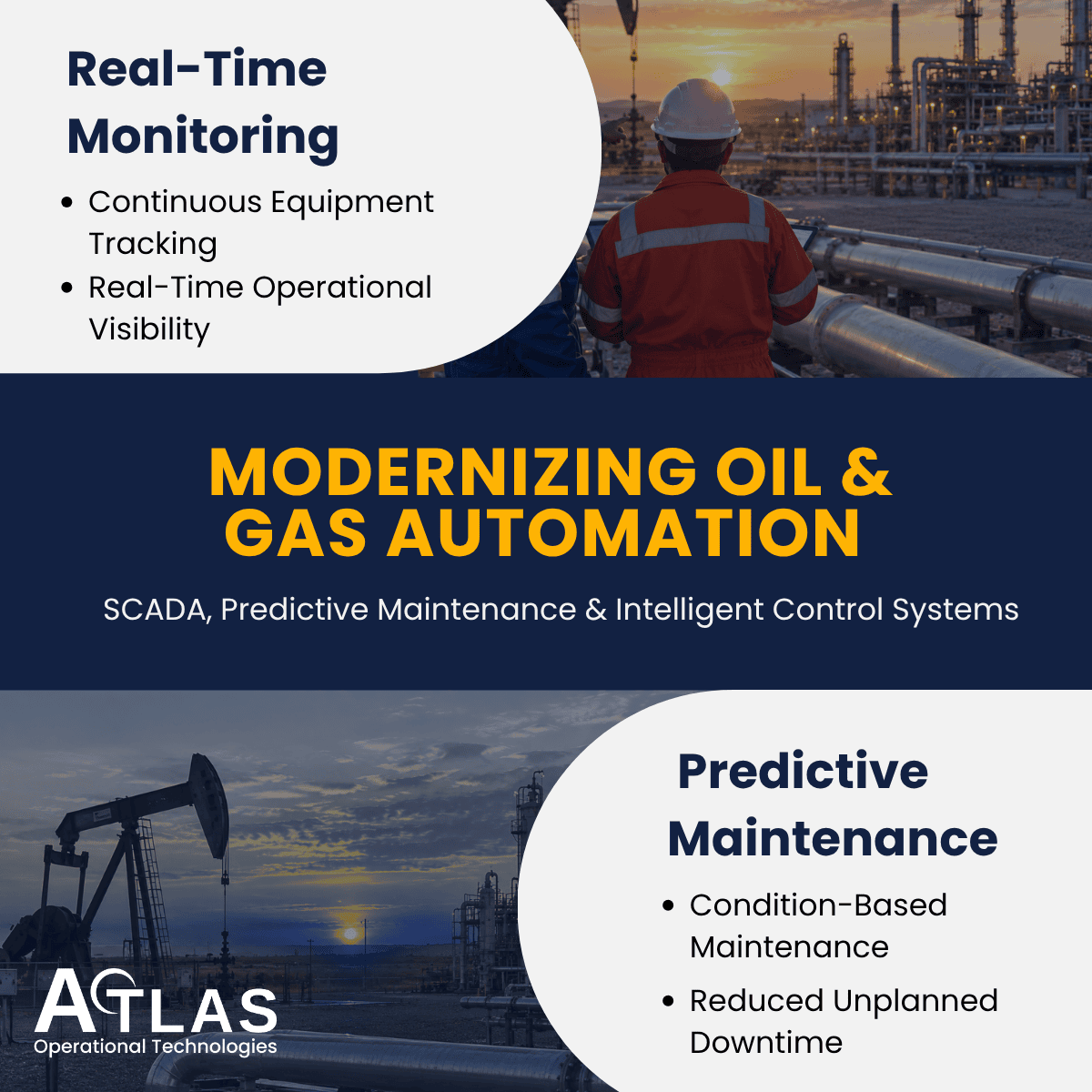
The oil and gas industry operates under immense pressure to meet global energy demands while maintaining high standards of safety and efficiency. Automation has emerged as a transformative solution, enabling companies to optimize operations, reduce human error, and make data-driven decisions across upstream, midstream, and downstream activities. By integrating modern automation technologies, operators can monitor production in real time, predict equipment failures, and improve overall operational reliability.
Industry Pressures Driving Automation Adoption
Several industry pressures are accelerating automation adoption. Regulatory requirements are increasingly strict, mandating safer and environmentally responsible operations. Operational costs continue to rise, making labour-intensive processes less sustainable. Skilled workforce shortages further complicate operations in hazardous environments. In addition, competitive pressures drive the need to maximize uptime, minimize production interruptions, and optimize resource utilization. Automation addresses these challenges by providing consistent monitoring, real-time insights, and predictive maintenance capabilities.
Why Efficiency and Safety Are Core Priorities
Efficiency and safety are intertwined in oil and gas operations. Efficient processes reduce waste, energy consumption, and operational costs, while safety measures protect personnel, assets, and the environment. Automation enables both by offering real-time process visibility, early anomaly detection, and the ability to make swift operational adjustments, ensuring smooth, safe, and cost-effective operations.
The Role of Digital Transformation in Modern Operations
Digital transformation enhances automation by incorporating advanced analytics, cloud computing, and machine learning. Operators can simulate production scenarios, predict maintenance needs, and remotely manage assets. By leveraging digital tools, companies improve decision-making, reduce operational risk, and enhance compliance with safety and environmental regulations.
What Automation Technologies Benefit the Oil & Gas Sector?
Overview of Automation Categories
Automation solutions in oil and gas can be grouped into several key categories:
- Process Automation – Systems such as Distributed Control Systems (DCS) and hybrid control systems like PLC and SCADA can leverage Advanced Process Control (APC) to optimize production.
- Safety Automation – Safety Instrumented Systems (SIS) and automated shutdown mechanisms protect personnel and critical equipment. Working within your LOPA identified Safety Integrity Level (SIL) and support design and programming of your Safety Instrumented Functions (SIF).
- Remote Monitoring – Telemetry and SCADA systems provide real-time visibility and control of operations from remote locations.
- Predictive Analytics – IoT-enabled sensors and machine learning models forecast equipment failures and process inefficiencies.
How Automation Supports Upstream, Midstream, and Downstream Operations
In upstream operations, automation enhances drilling precision, well monitoring, and production optimization. Midstream activities, including pipelines, compressors, and storage facilities, benefit from continuous monitoring and predictive maintenance. In downstream processes, automation improves refining efficiency, energy management, and emission control, ensuring product quality and regulatory compliance.
Emerging Trends in Oil & Gas Automation
Emerging trends are shaping the future of automation:
- AI-driven analytics for process optimization
- Digital twins for asset simulation and risk assessment
- Robotics for inspections in hazardous environments
- Fully autonomous operations in remote or high-risk sites
SCADA Integration for Real-Time Visibility & Control
What Is SCADA and Why It Matters
SCADA (Supervisory Control and Data Acquisition) systems enable operators to monitor and control complex industrial processes in real time. SCADA provides a comprehensive view of operational data, allowing for proactive decision-making and minimizing downtime.
Key SCADA Functions in Oil & Gas
SCADA systems perform several critical functions:- Monitoring equipment and process conditions
- Collecting and analyzing data from multiple assets
- Triggering alarms for abnormal operations
- Enabling remote control of critical processes
Benefits: Reliability, Operational Efficiency, Reduced Downtime
SCADA integration improves operational reliability, reduces unplanned downtime, and enhances overall process efficiency. Operators can identify potential failures early and optimize resource allocation to maintain consistent production.
SCADA + IIoT: Evolving the Control Landscape
When combined with Industrial Internet of Things (IIoT) devices, SCADA systems become more intelligent. The network can predict failures, automate corrective actions, and provide advanced analytics to further optimize operations.
Practical Use Cases- Pipeline monitoring and leak detection
- Wellhead performance management
- Compressor and pump station oversight
- Storage tank surveillance
Remote Operations & Telemetry Systems
Moving Operations Away from Hazard Zones
Remote operations allow critical tasks to be managed from safe, centralized locations, minimizing personnel exposure to hazardous conditions while maintaining operational control.
Real-Time Monitoring from Remote Operation Centers
Centralized control centers enable real-time supervision of processes and equipment. Operators can detect anomalies, initiate interventions, and ensure smooth production without being physically present at the site.
Telemetry Solutions for Offshore, High-Altitude & Desert Environments
Telemetry systems are invaluable for remote and challenging environments such as offshore rigs, desert fields, and high-altitude platforms. They provide reliable communication and data transfer even in extreme conditions.
How Remote Operations Reduce Labor & Safety Risk
By minimizing on-site personnel requirements, remote operations decrease labor costs and reduce the likelihood of accidents. Operators can perform monitoring and control functions safely from remote locations.
Case Applications- Well performance tracking
- Pump station management
- Remote valve and flow control
Real-Time Monitoring and Data Automation
Importance of Data Visibility in Safety & Efficiency
Real-time monitoring ensures that operators can quickly identify process deviations and respond effectively, improving safety and operational efficiency.
Real-Time Sensors for Pressure, Flow, Temperature, Vibration
Sensors track critical parameters continuously, providing accurate data that informs operational decisions and predictive maintenance schedules.
Automated Alerts & Predictive Indicators
Automated alerts notify operators of anomalies, while predictive indicators forecast potential failures before they occur, preventing unplanned downtime.
Integrating Analytics into Decision-Making
Analytics tools help operators interpret complex datasets, optimize production processes, and improve energy utilization, turning raw data into actionable insights.
Predictive Maintenance & IoT Sensors
Shifting from Reactive to Predictive Operations
Predictive maintenance transforms traditional reactive approaches by using data to anticipate equipment failures and schedule maintenance proactively.
IoT Sensors and Condition-Based Maintenance
IoT sensors provide continuous monitoring for critical assets, enabling condition-based maintenance rather than time-based schedules. This approach optimizes resource use and extends equipment life.
Benefits: Reduced Downtime, Lower Costs, Longer Equipment Life
Predictive maintenance reduces unplanned outages, lowers maintenance costs, and maximizes the operational lifespan of pumps, motors, valves, and compressors.
Real Examples
- High-pressure pumps monitored for vibration and temperature
- Compressors tracked for efficiency losses
- Valve operations observed for early wear detection
Safety Systems and Automated Shutdown Technologies
SIS (Safety Instrumented Systems) & ESD Integration
Safety Instrumented Systems (SIS) and Emergency Shutdown (ESD) technologies intervene automatically when processes exceed safe limits, protecting personnel and equipment. Each SIS is composed of one or more Safety Instrumented Functions (SIFs), which are designed to achieve specific risk reduction objectives. The required Safety Integrity Level (SIL) of each SIF defines its reliability and performance standards, ensuring the system meets the necessary safety targets.
Leak Detection Systems for Pipelines
Automated leak detection continuously monitors pipelines, ensuring immediate response to pressure changes or anomalies.
Fire & Gas Monitoring Automation
Advanced fire and gas detection systems provide early warnings, reducing response time and preventing catastrophic events.
Improving Compliance and Worker Safety
Automation ensures compliance with safety regulations and minimizes risk to employees working in hazardous environments.
When and How Automatic Shutdown Saves Lives
Automatic shutdown systems can isolate equipment, stop fuel flow, or halt processes during emergencies, preventing accidents and protecting lives.
Process Optimization Through Advanced Control Systems
DCS (Distributed Control Systems) for Plant Automation
Distributed Control Systems are the core platforms used for plant-wide automation, similar in role to PLC and SCADA systems. They coordinate complex operations, maintain stable and consistent production, and manage resources across the facility. Advanced Process Control (APC) is not a control system itself, but a set of optimization techniques that can be applied on top of DCS, PLC, or SCADA environments to further improve efficiency, throughput, and product quality.
Advanced Process Control (APC) for Refining & Processing Plants
APC systems predict process fluctuations and make real-time adjustments, improving product quality and operational efficiency.
Improving Production Stability and Energy Efficiency
Automation reduces process variability, stabilizes output, and conserves energy, resulting in cost savings and more reliable production.
Reducing Emissions & Waste
By optimizing process conditions, advanced control systems reduce waste generation and minimize environmental impact, contributing to sustainable operations.Future of Automation in Oil & Gas
AI for Optimization and Predictive Insights
Artificial intelligence enables operators to analyze large datasets, identify inefficiencies, and optimize processes, supporting proactive decision-making.
Digital Twins for Asset Simulation & Risk Reduction
Digital twins create virtual replicas of physical assets, allowing operators to simulate operational scenarios, test modifications, and reduce risks without halting production.
Robotics for Inspection and Hazardous Tasks
Robotic systems can perform inspections, maintenance, and repairs in environments unsafe for humans, enhancing safety and operational efficiency.
Fully Autonomous Operations: What’s Next?
The future of oil and gas operations will likely involve fully autonomous systems, where AI, robotics, and integrated automation manage extraction, transport, and refining with minimal human intervention.
Conclusion
Automation is now a strategic imperative for the oil and gas industry. By integrating SCADA systems, IoT sensors, predictive maintenance, and advanced process control, operators can achieve higher efficiency, enhanced safety, and optimized performance across upstream, midstream, and downstream operations. Modern automation solutions reduce downtime, lower operational costs, and improve compliance with regulatory standards. Looking ahead, technologies such as AI, digital twins, and robotics promise to further revolutionize the sector, creating fully autonomous, data-driven operations that enhance productivity while protecting personnel and the environment. Investing in automation today ensures long-term operational resilience, profitability, and sustainable growth for oil and gas companies.