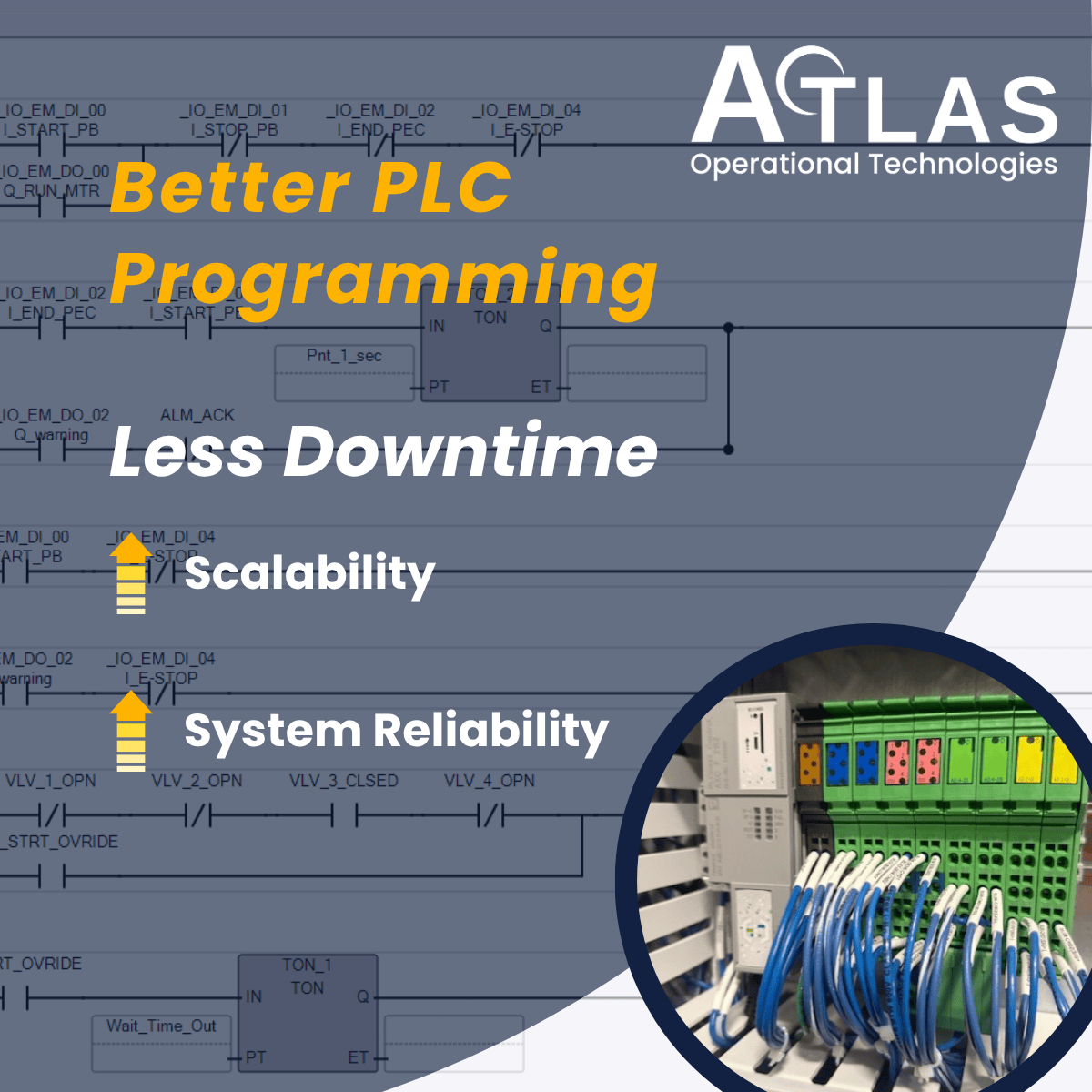
Reliable automation systems are built on disciplined PLC Programming, not shortcuts or one-off logic fixes. For control engineers, PLC code is not just a means to make machines run, but it is a long-term operational infrastructure. Poorly structured logic leads to downtime, difficult commissioning, and endless troubleshooting. Well-designed PLC programs with consistent use of logic libraries, on the other hand, improve safety, scalability, and lifecycle performance. Well commented code accelerates troubleshooting, optimizations, and expansions.
This guide breaks down PLC programming best practices used in real industrial environments and explains how Atlas OT applies these principles through its PLC and controls engineering services.
What Makes PLC Programming Reliable?
Reliable PLC programming goes beyond “it works.” It means the system behaves predictably under all operating conditions, is easy to troubleshoot online, and can be maintained or expanded without rewriting core logic.
In industrial automation, reliability is defined by:
- Deterministic execution and predictable scan behavior
- Clear separation of functions and responsibilities
- Logic that supports commissioning, diagnostics, and long-term maintenance
- Compliance with recognized engineering standards
Controls engineers often inherit PLC programs written under time pressure. These systems may run initially but fail during abnormal conditions or future expansions. Applying proven PLC programming best practices from the start avoids this technical debt.
At Atlas OT, PLC reliability is treated as an engineering discipline, not a programming style. Programs are structured for repeatable use of libraries and consistently documented comments to support operations teams, maintenance technicians, and future engineers not just initial startup. This philosophy is central to our industrial automation and controls services.
Designing Control Logic with Structure and Clarity
Effective control logic design starts with intentional structure. A PLC program should read like a system diagram, not a puzzle.
Core Principles of Structured PLC Logic
- Divide logic into functional areas (process control, safety, alarms, communications)
- Use modular routines or function blocks instead of monolithic programs
- Maintain consistent naming conventions for tags, routines, and I/O
- Avoid hidden states and undocumented latching
Structured logic allows engineers to trace behavior online quickly, especially during live troubleshooting. It also reduces the risk of unintended interactions between sequences.
Our Approach to Control Logic Design
We design PLC programs using layered logic models that separate:
- Physical I/O handling
- Core process control
- Operator commands and modes
- Fault handling and diagnostics
This structure supports easier commissioning, faster troubleshooting, and safer long-term operation. These practices are applied consistently across our PLC and DCS programming projects.
Following Ladder Logic Standards and IEC 61131-3
Standards are not bureaucracy they are safeguards against inconsistency and confusion.
Why Standards Matter in PLC and DCS Programming
Without standards, multi-engineer PLC projects quickly become unmanageable. Inconsistent rung structures, tag naming, and logic flow increase commissioning time and introduce risk.
Recognized standards provide:
- Consistency across projects and teams
- Easier onboarding for new engineers
- Predictable troubleshooting behavior
Applying IEC 61131-3 in Practice
The IEC 61131-3 standard defines common PLC and DCS programming languages and structures. While ladder logic remains dominant in many facilities, adherence to ladder logic standards improves clarity and maintainability.
Best practices include:
- One function per rung or network
- Clear rung comments explaining intent, not just action
- Avoiding nested logic that obscures cause-and-effect
We follow standards-based PLC and DCS development to ensure programs remain readable and supportable throughout the system lifecycle.
Building PLC and DCS Programs for Commissioning Efficiency
Commissioning is where PLC and DCS programs are truly tested. Logic that looks clean on paper can fail during real-world startup if commissioning workflows were not considered.
Designing with Commissioning in Mind
Effective PLC programming anticipates commissioning needs by including:
- Manual and maintenance modes
- Step-by-step sequence enablement
- Safe simulation and forcing strategies
- Clear status indicators for each process stage
These features allow engineers to validate systems incrementally instead of troubleshooting entire processes at once.
Commissioning Workflows at Atlas OT
We align PLC and DCS development with structured commissioning workflows, reducing startup delays and risk. Programs are built to support:
- Controlled testing of I/O and devices
- Progressive activation of sequences
- Rapid isolation of faults during startup
This approach is especially valuable in complex facilities where downtime is costly.
Error Handling, Alarms, and Diagnostics
Reliable automation systems fail gracefully. That requires intentional fault handling and diagnostic logic.
Designing for Meaningful Alarms
Poor alarm design overwhelms operators and hides root causes. Best practices include:
- Alarms tied to actionable conditions
- Clear fault descriptions and priorities
- Separation of warnings, faults, and trips
Diagnostics That Support PLC and DCS Troubleshooting
Good diagnostics are essential for efficient PLC and DCS troubleshooting. Engineers should be able to determine:
- What failed
- Why it failed
- What condition must be cleared
We embed diagnostic logic directly into PLC programs so maintenance teams can resolve issues without guesswork.
PLC Programming Techniques That Simplify Troubleshooting
Controls engineers often troubleshoot systems online under pressure. PLC programs should support this reality.
Best practices include:
- Using explicit status bits for sequences and modes
- Avoiding implicit states created by overlapping logic
- Designing logic that can be followed rung-by-rung online
- Providing clear separation between command logic and execution logic
Our programs PLCs with maintainability in mind, ensuring that future engineers can understand and modify systems safely.
Documentation, Version Control, and Change Management
PLC programs are living systems. Without proper documentation and change control, reliability degrades over time.
In-Code Documentation Best Practices
Effective PLC documentation includes:
- Rung and routine comments explaining intent
- Clear descriptions for alarms and fault codes
- Identification of manual overrides and test logic
Managing Changes Safely
Atlas OT supports disciplined change management by:
- Tracking logic revisions
- Aligning PLC changes with operational approvals
- Reducing risk during updates and expansions
These practices protect system integrity and support audits or regulatory reviews.
Scaling Automation Systems Over Time
Facilities evolve. PLC programs must support growth without requiring full rewrites.
Best practices for scalability include:
- Reserving I/O and program structures for expansion
- Designing reusable logic blocks
- Avoiding hard-coded limits
We apply these principles across industrial and building automation environments, ensuring systems remain flexible and future ready.
How Atlas OT Delivers Reliable PLC Programming
We provide PLC and controls engineering services built on proven programming standards and real-world operational experience.
Key strengths include:
- Standards-based PLC and DCS development
- Structured control logic design
- Commissioning-focused programming
- Long-term maintainability and support
We partner with controls engineers and facility teams to deliver automation systems that remain reliable long after startup.
PLC Programming Best Practices Checklist
Controls engineers can apply these core principles immediately:
- Design structured, modular control logic
- Follow ladder logic standards and IEC 61131-3
- Build logic to support commissioning workflows
- Embed diagnostics for efficient PLC troubleshooting
- Document intent, not just functionality
Conclusion: PLC Programming as Critical Infrastructure
PLC Programming defines the reliability of automation systems. Treating PLC code as critical infrastructure not temporary logic leads to safer, more maintainable, and more scalable operations.
Atlas OT applies disciplined PLC programming best practices across every project, supporting reliable automation systems in demanding industrial environments.